
the subject does not exist
tripping up on language

I’m sharing this old essay, truncated & slightly updated, because the issue came up in a recent class, when I mentioned removing the troublesome word “hovered” from the early pages of my sf novel.
The metaphor is dangerous,
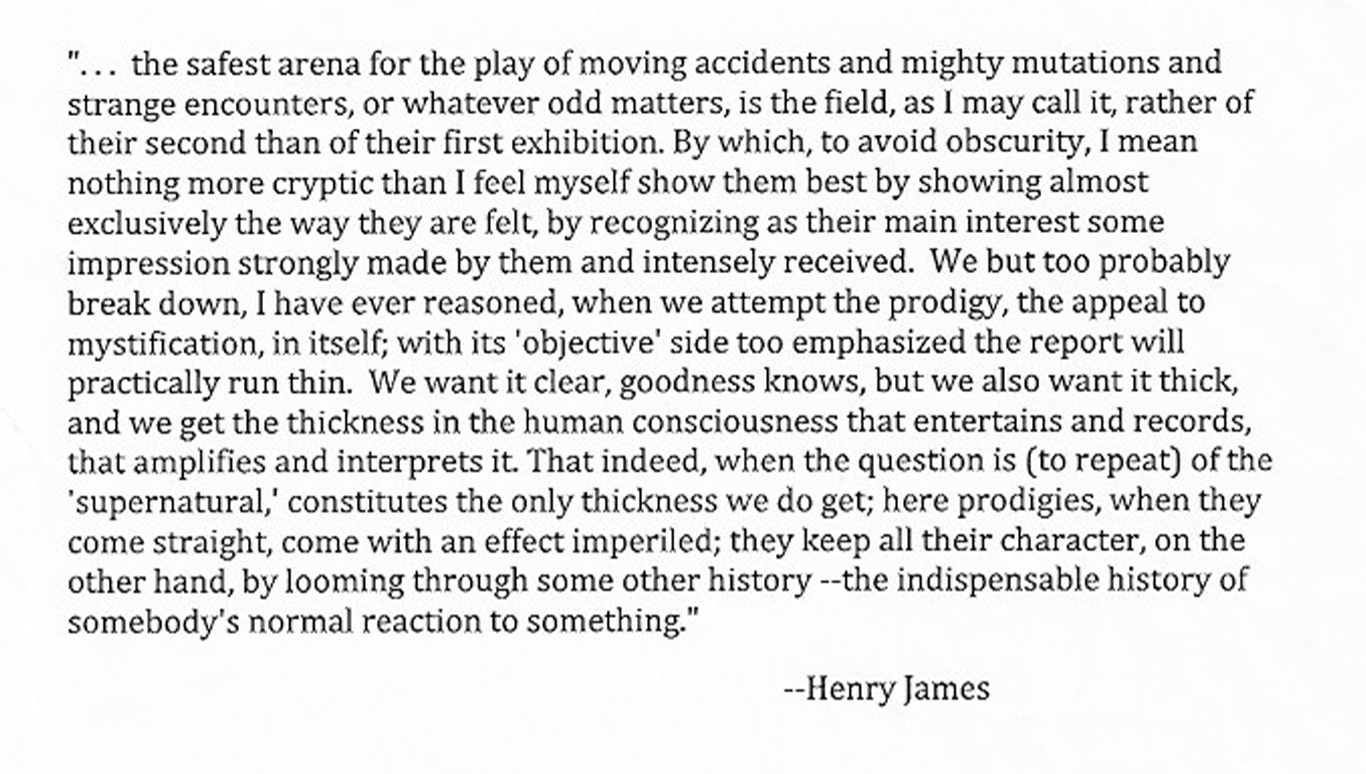
Or at least, it is for the speculative fiction writer. That’s because, even when they confine themselves to Earth, the SFF writer describes an alien landscape. All things are possible. The story must be translated, in a sense, twice—first from the imagination to the page, as Edwidge Danticat describes of the act of writing fiction generally, below:
And a second time, because in speculative fiction, that imagined reality does not resemble our own. For this reason, Joanna Russ describes sf as a genre whose “subject matter does not exist;” it hasn’t yet occurred, cannot occur, and/or may never. Hence, as Gwyneth Jones writes in The Cambridge Companion to Science Fiction, “the reading of an sf story is always an active process of translation.” This active translation process is a genre-marker, a definer: SFF is a “literature of estrangement,” says Jane L. Donawerth.
Figurative language removes description a step away from the concrete. Applied in an SFF text, these basic writer tools can make the strange only more strange and potentially inaccessible to the reader. For example, “when an sf writer says, ‘She took heavy mechanical steps towards the door,’” as Orson Scott Card explains in How to Write Science Fiction & Fantasy, “there is always the possibility that in fact her legs are machinery.” Card finds that experienced readers of sf and fantasy are more likely to assume that the character might be an android, robot, or cyborg—while the inexperienced will assume “mechanical” is a characterizing descriptor, an insight into the character’s mental state. Samuel Delany illustrates the same point with the example, “her world exploded,” whereas Ursula LeGuin demonstrates the idea as, “he was absorbed in the landscape.”
The risk of confusion lessens as the narrative unfolds, but never completely fades away.
A tangent:
Q: Is this instinct (to interpret literally) the difference between an sff and literary reader?
A: As they teach the reader how to read their story, writers can go minimalist in worldbuilding—often favored by literary writers, as simplicity of world allows room for depth of character psychology—or maximalist, more often favored by straight-up genre writers, which favors exploration and, frequently, literalism. This corresponds to reader expectations.
Put another way, audience expectations are a tension of desire and patience, for what is given and what is withheld.
A common piece of writing advice is that each scene should accomplish two (or more) ends, further the plot and develop the character, for example—and while that is fine advice, since many early draft scenes hit the cursor’s terminal-blinking without depicting change or much else of interest—in fiction’s sequential “and then this, and then that happened”- form, not everything can happen at once. There is a hierarchy of attention, which makes for a hierarchy of telling. The writer can hint at many elements early, but not foreground them all. That simply isn’t how the reader processes information. (We—humans, readers—are not very good at experiencing both intellectually and emotionally at the same time. We are bad multitaskers, no matter how we lie to ourselves. So the lyrical speculative writer must choose relatively simple initial brushes with the strange. Simple in plot or in the version of oddity, scaled down to fit. In the beginning, the writer steps lightly.) The writer curls their finger and tries to waggle the reader on.
So: What pulls the genre reader—as opposed to the literary reader—into the story? (A sense of curiosity and awe?) What will they be patient to fully understand? (The nature of the wider world?) OR What will they allow to be vague, underdeveloped or unknown, until the story can come around to paint in that element?
Practically speaking,
the danger of the metaphor in SFF is a point of view problem.
The world, being the world, resists being viewed entire. But once motivated by story, the POV wants desperately to know something, and will chase it, because the characters want to know. This motion, of the characters pressing through an ever-shifting, always questing and questioned life, is one full of richness. The POV provides not only access to an interesting wedge of a foreign world, translating that imagined reality to the page, but also access to a person of that world, who has been shaped by it. The character gradually reveals themselves in the act of looking at a strange thing, in hitting up against the obstacles of their world, and in doing so, gradually reveals the world. One illuminates—reveals the complexities—of the other.
No person has total and unbiased knowledge of the nature of things. The POV enacts the problem of understanding the world. Speculative fiction activates that truth, bringing it to the fore of the stage.
This essay, I readily admit, is influenced heavily by Do Metaphors Dream of Literal Sheep?, by Seo-Young Chu. In it, she writes that “science fiction is a genre that operates beyond (or even counter to) mimesis.” Consequently, speculative fiction “can accommodate referents ordinarily averse to representation,” and, “in transcending the literal/figurative dichotomy, science fiction provides a representational home for referents that are themselves neither purely literal nor purely figurative in nature.”
Perhaps it is wrong to think of the metaphor as a ‘problem’ after all. The metaphor is a tint on the story, a sign that a person was there. A soul was there. The distance of figurative language is a way in, a slantwise approach when straight paths would fail to bridge the divide.
There is power, not just pitfalls, in the evocative connotations of words: what a thrill, words pointing to objects and experiences that have no neat referent in the known world. What possibility, in the eternally receding horizon.
˚.⋆✶ Amanda ✶⋆.˚